Our projects: research for key topics of the future

Preserving the climate and environment, researching health and medicine, building resilience and infrastructure, supporting founders and entrepreneurs. Our projects contribute to an ecologically intact, socially equitable, and economically viable world and are distinguished by their close connection to real-world application. Since 2020, we have been guided by the United Nations Sustainable Development Goals (SDGs) and the research expertise of the Fraunhofer-Gesellschaft in selecting our projects.  
Alle Projekte
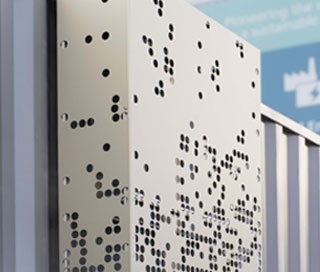
  • Vertikale Wasserrückhaltesysteme
    © Fraunhofer UMSICHT

    When houses, streets and squares cover a large portion of the available area, heavy rain quickly becomes a hazard. Insufficient infiltration capacity poses a risk of overloading sewer systems, flooding and damage to buildings and infrastructure. To prevent this, sufficient water retention systems are needed. However, space and financial resources are often lacking. Holger Wack’s team at the Fraunhofer Institute for Environmental, Safety and Energy Technology UMSICHT has developed a solution in the vertical water sponge.

    more info
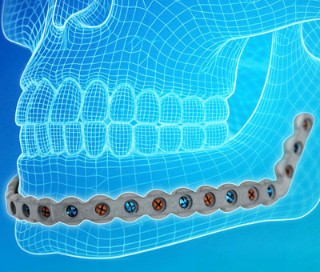
  • © Fraunhofer IFAM

    Implants effectively stabilize injured bones or replace bone segments. However, painful infections can occur, complicating or even preventing healing. The risk is higher in heavily contaminated wounds, which are especially common in war zones where many bone injuries need treatment. Currently, clinics in Ukraine are struggling with numerous poorly healing bone injuries that can lead to permanent damage. This is an issue that researchers at the Fraunhofer Institute for Manufacturing Technology and Advanced Materials IFAM in Bremen aim to address with a novel technology.

    more info
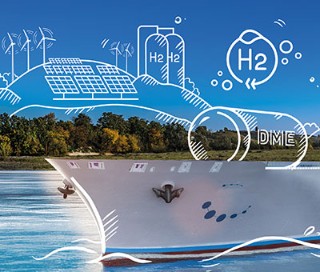
  • © istock (audioundwerbung)/Illustration: Theresa Pfeiffer

    Green hydrogen is considered a key component of the energy transition and the shift to a CO₂-neutral industry. However, many countries can only produce their own hydrogen to a limited extent or at high cost, and are therefore dependent on imports. One way to store and transport hydrogen is by converting it into ammonia (NH₃). However, ammonia is toxic and poses a risk to the marine environment when transported by ship. Furthermore, the use of hydrogen, for example for energy production or as a fuel, requires a significant amount of water.

    more info
  • © iStock, shutterstock/Illustration: Theresa Pfeiffer

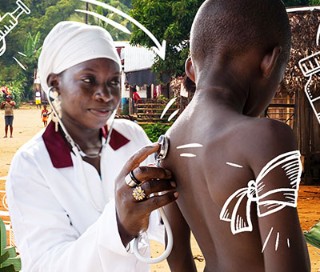
    A self-sufficient power supply, modular equipment, and high robustness make the mobile care platform »PreCare« an adaptable solution for primary healthcare in remote regions of Africa. This makes it suitable not only for comprehensive healthcare provision, but also for the early detection of epidemics and for use in disaster situations.

    more info
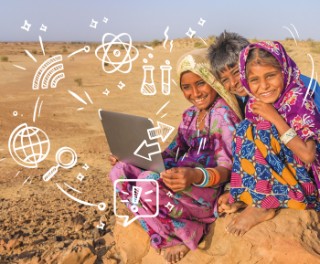
  • Foto von drei Kindern vor einem Laptop in einer trockenen Landschaft im Globalen Süden sowie Illustrationen zum Thema "Online-Konnektivität"
    © iStock/Illustration: Theresa Pfeiffer

    The internet is the communication network of our world. A stable internet connection is a prerequisite for the successful operation of companies, hospitals and public administrations. However, 4 billion people around the world still do not have access to the internet. They are offline and, therefore, excluded from digital participation.

    more info
  • © Fraunhofer EMFT/Bernd Müller/Illustration: Theresa Pfeiffer

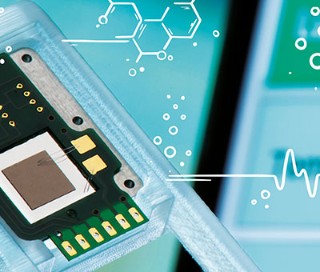
    The Smartpump is a miniature lab »to go«. It fits inside a mobile phone or a jacket seam and can be attached to the skin with an adhesive patch or even implanted inside the human body. Combined with the right kinds of sensors, it can measure factors such as particulates, toxic gases, humidity, and insulin levels. It can also be used as a micropump to deliver tiny doses of gas or liquid. The Smartpump unlocks possibilities for new solutions wherever small mobile analysis and dosage options add value — for example, as part of an early warning system or for medical applications.

    more info