MAOmed – Anti-Inflammatory Surface Coating Enhances the Compatibility of Bone Implants

Why do we need a new solution?

Implants effectively stabilize injured bones or replace bone segments. However, painful infections can occur, complicating or even preventing healing. The risk is higher in heavily contaminated wounds, which are especially common in war zones where many bone injuries need treatment. Currently, clinics in Ukraine are struggling with numerous poorly healing bone injuries that can lead to permanent damage. This is an issue that researchers at the Fraunhofer Institute for Manufacturing Technology and Advanced Materials IFAM in Bremen aim to address with a novel technology.
Who will benefit from the new technology?

The MAOmed team has developed a novel anti-inflammatory coating for titanium implants that could accelerate bone healing and reduce the risk of complications. For patients, this would mean less postoperative pain and better prospects of full recovery without lasting damage. Faster healing and smoother therapy would also ease the burden on hospitals, especially on staffing and bed capacity. The coating can basically be used worldwide to improve outcomes for hip, knee or dental implants, for example.

Unterkieferimplantat mit entzündungshemmender Beschichtung
© Fraunhofer IFAM
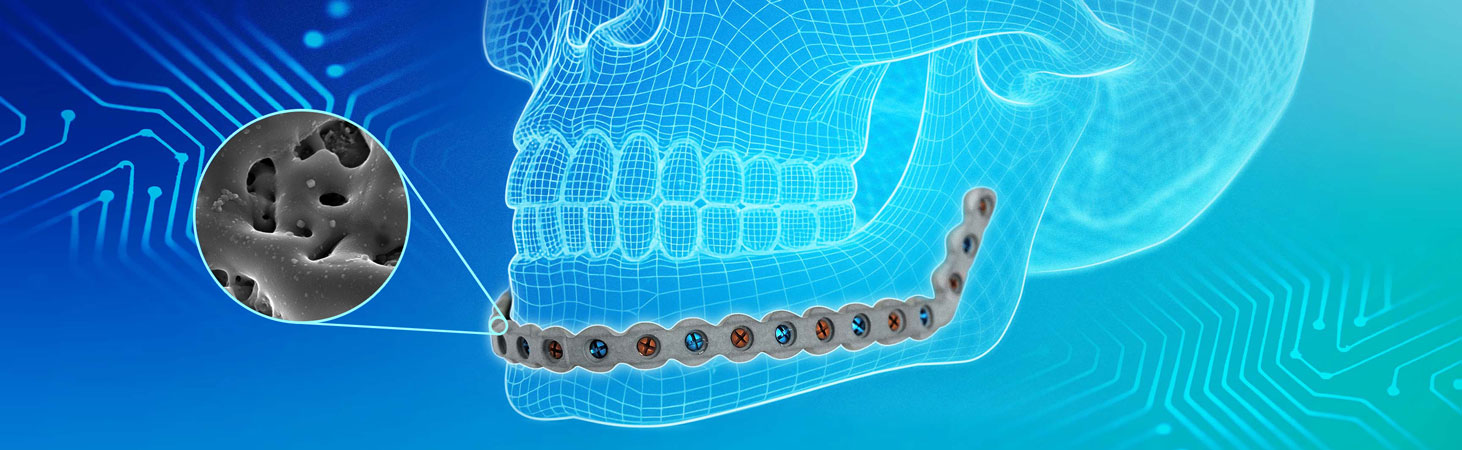
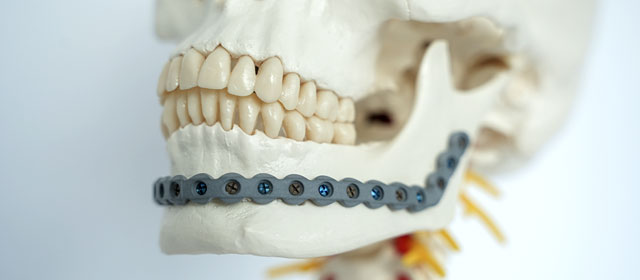
Osteosynthesis implant for a mandible with a porous surface created by means of micro-arc oxidation

How does the new solution work?

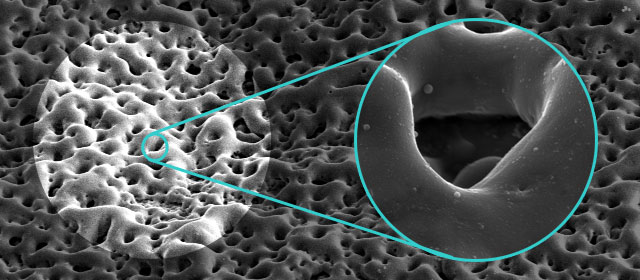
The researchers use a process known as micro-arc oxidation (MAO) to produce the innovative surface. The metal parts are immersed in a conductive electrolyte containing silver salts and exposed to high voltage (up to 300 volts). Within minutes, high-energy plasma discharges form a silver‑doped oxide layer on the implant, where targeted voltage pulses create pores for silver nanoparticles to be incorporated. The resulting porous structure can absorb antibiotics or other active substances – much like a sponge.

MAO-Oberfläche eines Titanimplantats
© Fraunhofer IFAM
Scanning electron micrograph of a silver-doped porous micro-arc oxide layer on titanium

The electrolyte and process parameters control the pore size and structure, thereby influencing the dosage of active substances. Once the MAO coating is complete, the researchers immerse the parts in a highly concentrated antibiotic solution. Capillary forces then uniformly fill the pores with the drug, which is later released in the body. Drug loading and release kinetics depend on the pore structure. The MAO coating is well tolerated by living tissue and supports rapid implant ingrowth.

Projektschritte
© Fraunhofer IFAM
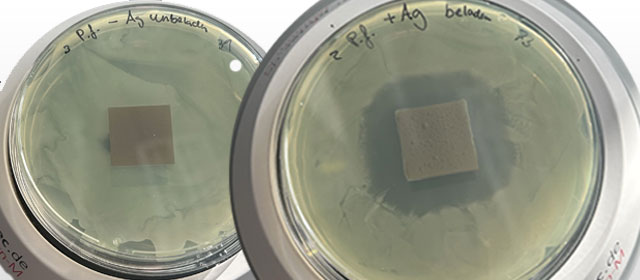
In laboratory tests, the researchers were able to precisely track the controlled drug release over the desired period and observe the enhanced effects from the added silver.

What makes the project unique?

This surface treatment is completely new to implant technology. There are only a few medical devices that use antibiotic coatings. Where they exist, manufacturing is typically much more complex than with MAOmed. This is because Fraunhofer’s process is particularly simple and cost-effective: Essentially a power supply and a cooling unit for the bath are sufficient. If necessary, the coating can therefore be applied in the operating room, including under improvised conditions, as encountered in crisis zones.

Titanschrauben mit MAO-Beschichtung
© Fraunhofer IFAM
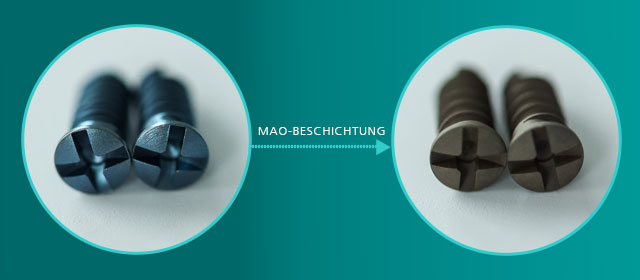
Process transfer to complex geometries – micro-arc oxidation surface on screws

Why is the Fraunhofer Future Foundation supporting this project?

The Fraunhofer Future Foundation is supporting MAOmed within its “Rebuilding Ukraine” special program. The goal is to improve treatment outcomes for war injuries and spare patients avoidable inflammation and consequential harm. Lower infection rates would also reduce the burden of follow-up care on the healthcare system.
In addition, MAOmed is strengthening the long-term scientific partnership between researchers in Germany and Ukraine. The project involves researchers from Fraunhofer IFAM and a medical team from the UNBROKEN National Rehabilitation Center in Lviv, Ukraine’s largest institution for the clinical care of war veterans. Both partners are planning to jointly scale and deploy MAOmed technology.

Further projects on »health and medicine«


PreCare

A self-sufficient power supply, modular equipment, and high robustness make the mobile care platform »PreCare« an adaptable solution for primary healthcare in remote regions of Africa. This makes it suitable not only for comprehensive healthcare provision, but also for the early detection of epidemics and for use in disaster situations.


CycloPlasma

For the first time ever, CycloPlasma technology has made it possible to sustainably remove carcinogenic wood preservatives from buildings without leaving any residue behind. This method has opened up new prospects for preservation of historical buildings in particular.


Smartpump

The Smartpump is a miniature lab »to go«. It fits inside a mobile phone or a jacket seam and can be attached to the skin with an adhesive patch or even implanted inside the human body. Combined with the right kinds of sensors, it can measure factors such as particulates, toxic gases, humidity, and insulin levels.