How does the new solution work?
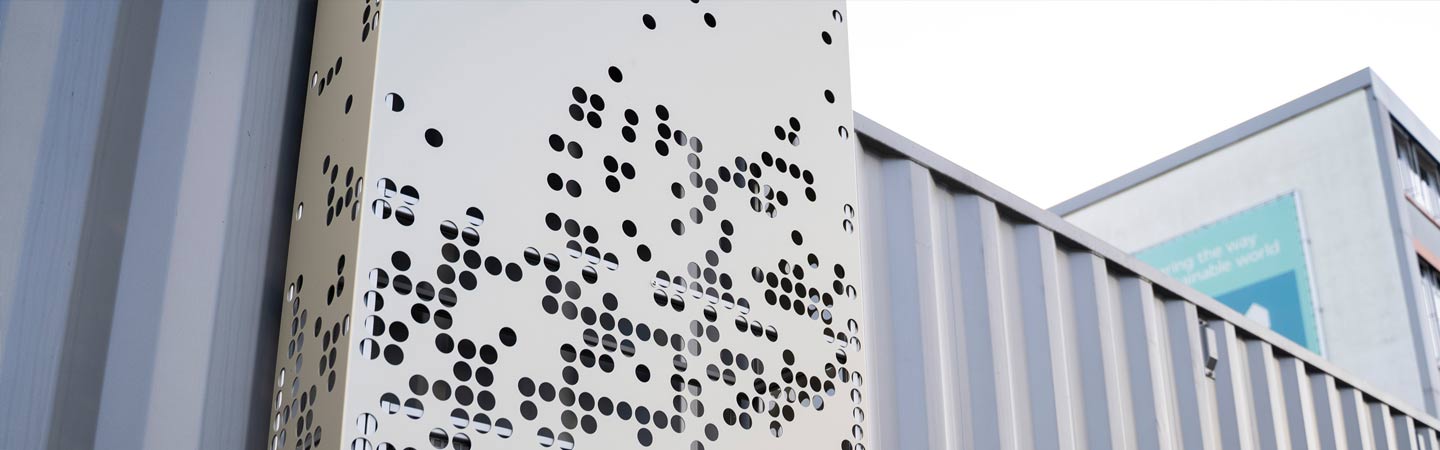
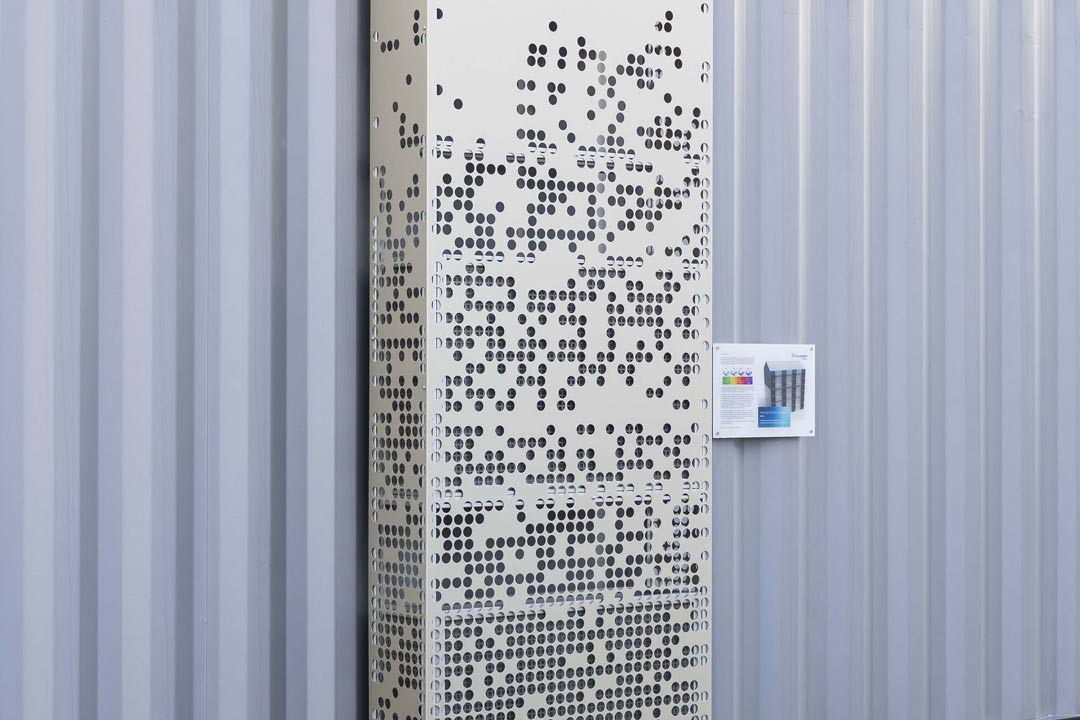
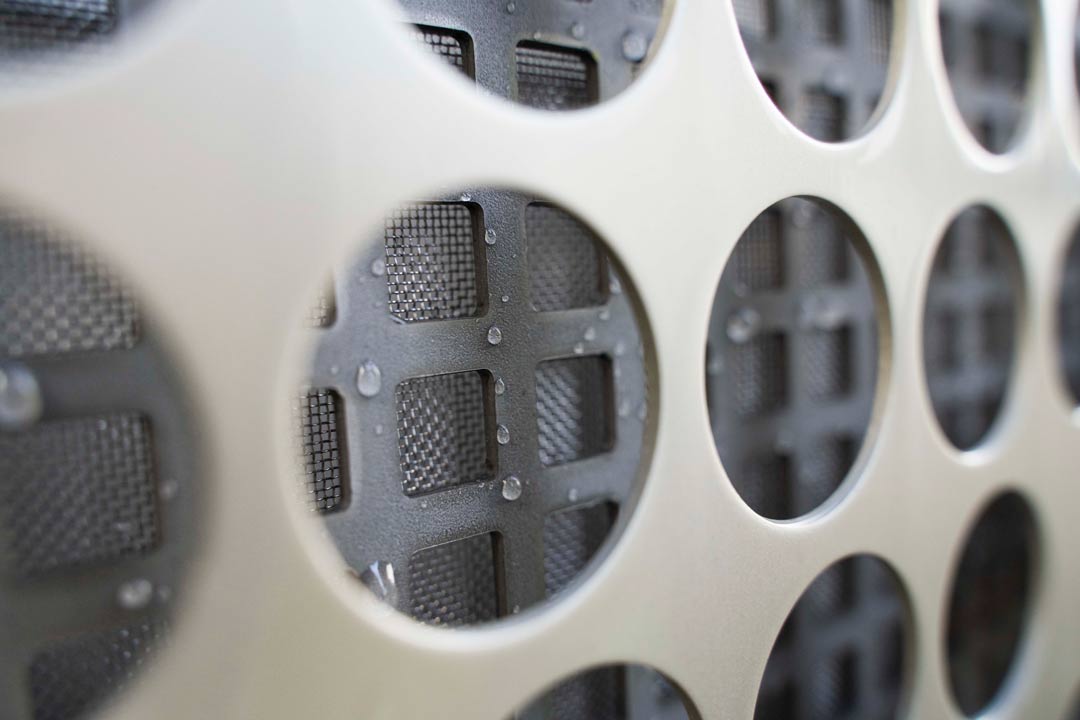
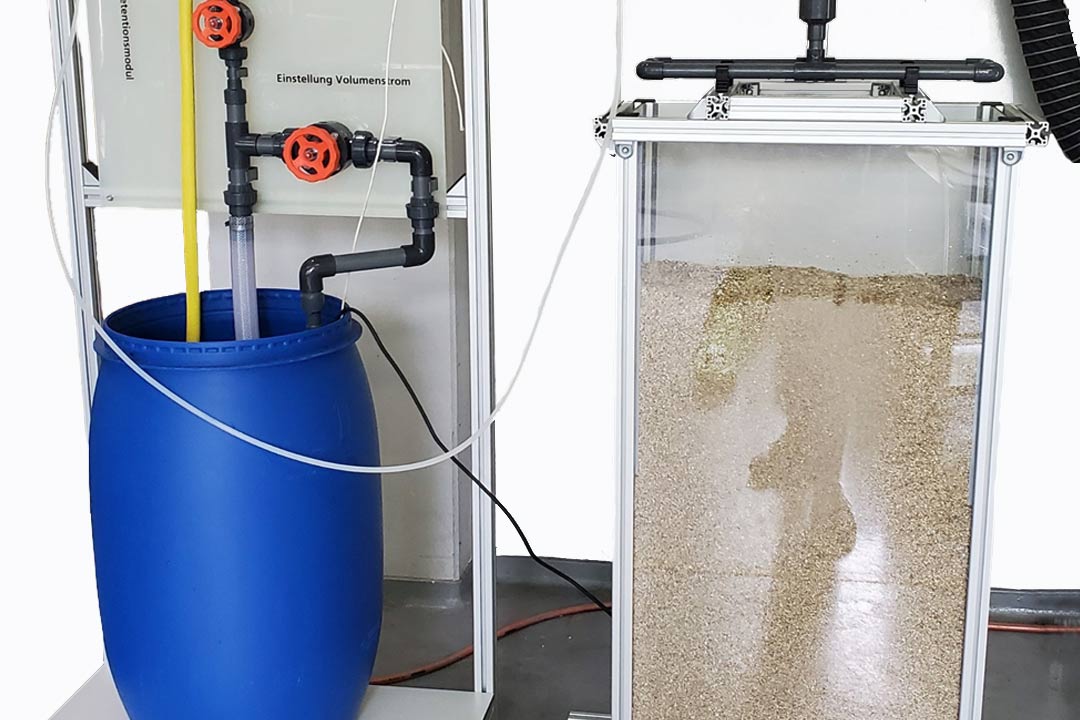
The water storage modules (retention elements) are among the key system components. Their permeable outer shells should be as stable as possible while allowing the evaporated moisture to permeate out unhindered. A specially fabricated perforated sheet of anodized aluminum has proven itself in the Fraunhofer institute's demonstrator. For the mineral core storing the water, the focus is especially on water storage capacity and permeability. Over the course of the project, perlite and vermiculite have proven to be ideal filler granulate and have outperformed all alternatives tested thus far.
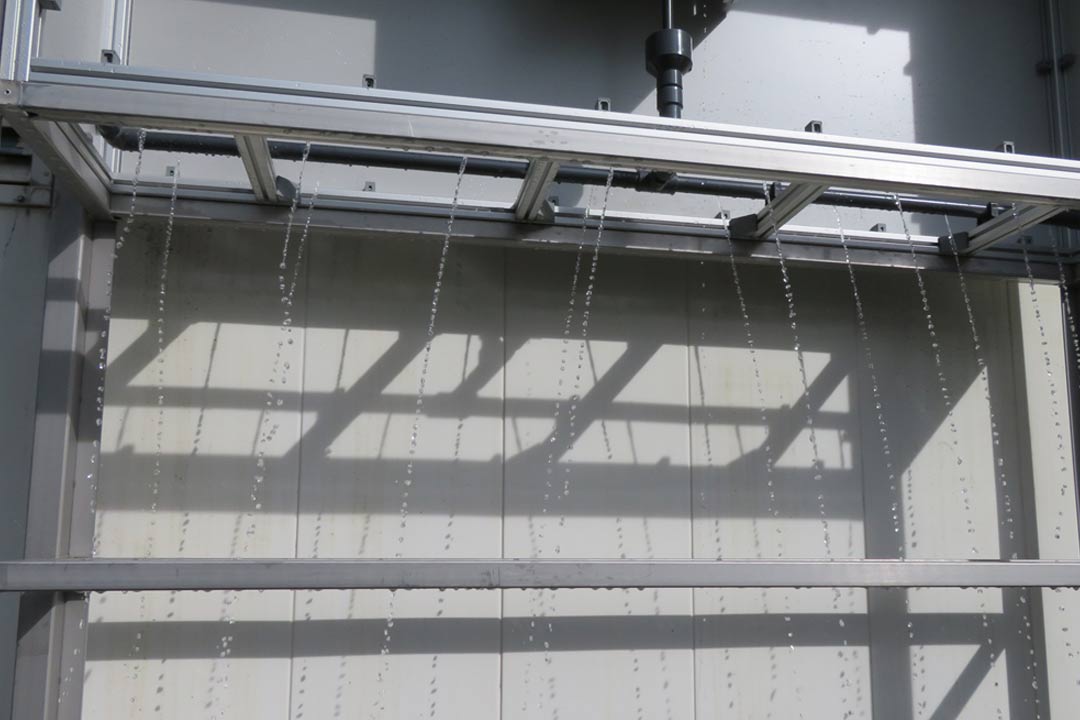
The retention modules are currently configured above each other. The top of each cascade ends with a control unit. The rainwater flows through a drainage system into this upstream intermediate storage element. Once a specific water level is reached, a type of sluice automatically opens downward and the water trickles through a water distributor and a sieve onto the water-retaining substrate. Another key question for the researchers is the optimal rate for the control unit to drain. During heavy rain, the process should proceed quickly enough to allow the mineral filler to completely absorb all of the water without losing valuable time.
If the control unit is at risk of overflowing, the excess rainwater is directed to the downspout and into the sewer system. This system functions with no digital controls or external power. It therefore remains fully operational even if the power supply fails in the event of a disaster. The architectural or planning company decides how to integrate the modules in the supporting structures. Possible implementations include elements integrated in the wall or offset facades, ideally with ventilation in the rear to enable the wall behind them to breathe.
 Fraunhofer Future Foundation