EARTH2 | Green Hydrogen Technology Worldwide

Why do we need this new technology?

Green hydrogen is viewed as an important element of the energy transition and the shift to carbon neutrality in industry. However, many countries have limited ability to produce their own hydrogen, or the costs are prohibitive, so they are forced to rely on imports. Conversion to ammonia (NH₃) is one possible way to store and transport hydrogen. However, ammonia is toxic and poses a threat to the marine environment when transported by ship. In addition, production of hydrogen for purposes such as to generate energy or for use as fuel uses a lot of water. This poses significant challenges in terms of both environmental and economic policy for areas of the world where water is in short supply, such as Chile — although arid countries that receive a lot of sunshine are considered potential exporters of hydrogen.

To address this issue, the Fraunhofer Institute for Solar Energy Systems ISE is working on the EARTH2 project to develop a technology to make storing and trading hydrogen more efficient. These innovations could pave the way for sustainable carbon-neutral industry, including the energy sector.
How does the new solution work?

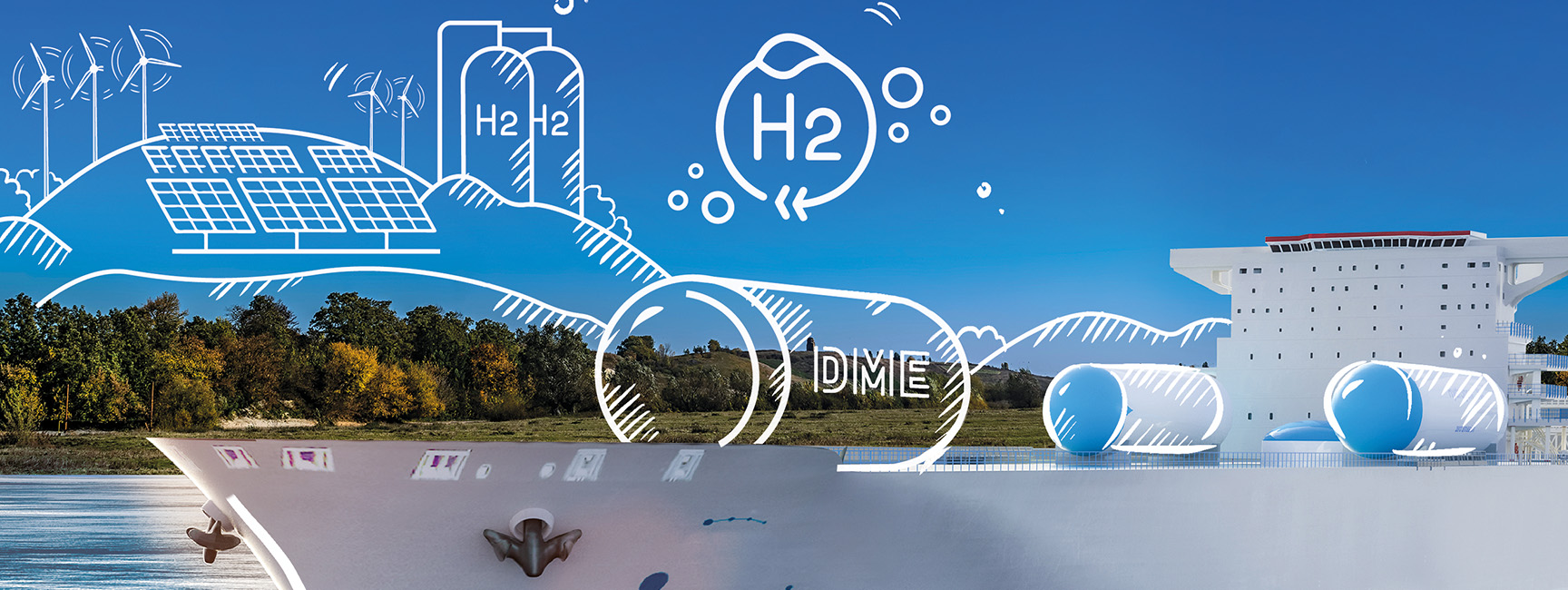
Dimethyl ether (DME) plays a crucial role in the method being developed as part of the EARTH2 project. DME is a colorless gas with a slightly sweet scent. It is nontoxic and does not harm the environment. In everyday life, it is used in products such as spray deodorants and spray cans, where it is present in its liquid state and transforms into gas when expelled. DME is viewed as an important energy source in the hydrogen value chain. To produce hydrogen sustainably, water is broken down into hydrogen and oxygen through the process of electrolysis. In a method patented by Fraunhofer ISE, CO₂ can be used to convert hydrogen into DME, which can then act as an ecofriendly hydrogen carrier.

DME could be a sustainable and efficient solution for transporting hydrogen. The researchers at Fraunhofer ISE are developing a process of a reuse and return loop, much like the system of reusable beverage bottles used in many countries. DME is transported to the country where it is to be used, where it is broken down into hydrogen and CO₂. The hydrogen is used locally, while the CO₂ is sent back to the producing country on the same ship. Once there, fresh hydrogen is added, producing fresh DME. Fraunhofer ISE’s patented method of producing DME to carry hydrogen could also conserve water on a large scale by reducing the net amount needed for electrolysis by 50 percent. 

© Fraunhofer ISE
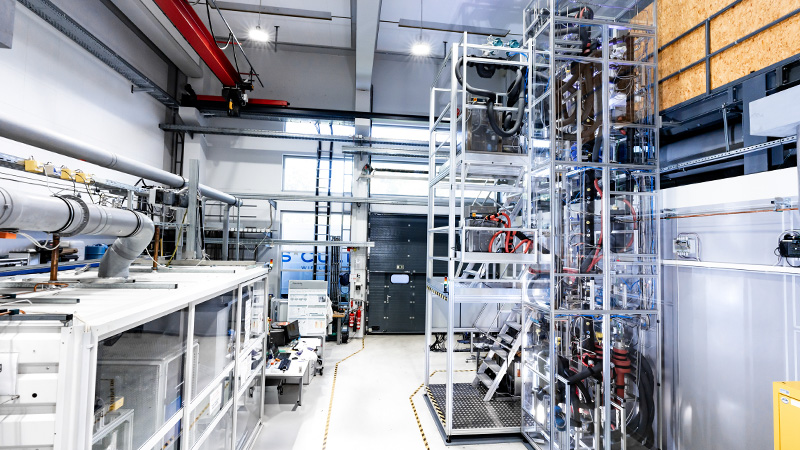
A reactive distillation column pilot plant: DME is efficiently produced and concentrated here in a combined process step.

Who will benefit from the new technology?

Areas around the world that are rich in sunlight and wind could become important exporters of hydrogen, developing new economic sectors. Since DME requires less water to produce than ammonia, there would be less adverse impact on agriculture in these countries, which are often water-stressed. The method being developed in the EARTH2 project could be an important element of an autonomous energy infrastructure for these countries, as DME could be used as a substitute for liquefied petroleum gas and reduce dependency on it. Countries that import energy, like Germany, could benefit from a broader selection of producers that can supply hydrogen, so they would no longer be reliant on suppliers from regions such as North Africa and the Middle East.

What makes the project unique?

The new method of producing DME is simpler and more efficient, as it requires less energy and reduces production costs by 39% compared to conventional methods. Previously, ammonia has frequently been used to transport hydrogen, but there are concerns about its harmful environmental impact. In this regard as well, DME could be a game changer as a carrier molecule, as it can store 47 percent more hydrogen than ammonia, potentially making transportation via ship more efficient. 

Why is the Fraunhofer Future Foundation supporting this project?

Ecofriendly DME holds out the prospect of previously untapped potential as a means of storing hydrogen. With the method from Fraunhofer ISE, it could play a central role in a sustainable hydrogen sector, supporting not only countries like Germany that import energy but also other areas around the world. For many countries, this would be a low-cost, resource-conserving solution for expanding green hydrogen technology and paving the way to a sustainable energy future.

More projects of Fraunhofer Future Foundation


NexusHub

The NexusHub project combines water-conserving crop cultivation and climate-friendly energy supply. The interaction of multiple robust technologies unlocks development prospects for less-developed regions.


WiBACK

4 billion people still do not have access to the internet. WiBACK (Wireless Backhaul) connects people who are excluded from digital participation with the rest of the world — and gives them long-term access to the education and healthcare systems.


EDDA

After disasters such as earthquakes, tsunamis, or hurricanes, aid supplies must be distributed in the crisis area under immense time pressure. To enable more efficient and targeted aid, the Fraunhofer ITWM is developing software that automatically assembles and analyzes images from drones.